
Website Traffic But No Leads? Here's Why (and How to Fix It)
You're getting website traffic but no leads. The analytics look healthy, visitors keep climbing, and yet the enquiry form stays quiet and the pipeline doesn't move. It's one of the most frustrating problems in B2B, because it feels like you're doing everything right.
Here's the uncomfortable truth: if your website gets traffic but no leads, you almost never have a visibility problem. You have a relevance and conversion problem. More traffic won't fix a page that doesn't tell the right buyer what you do, why it matters to them, and what to do next. Below is exactly why it happens, and the fixes that turn traffic into qualified leads.
Traffic was never the goal. Buyers are.
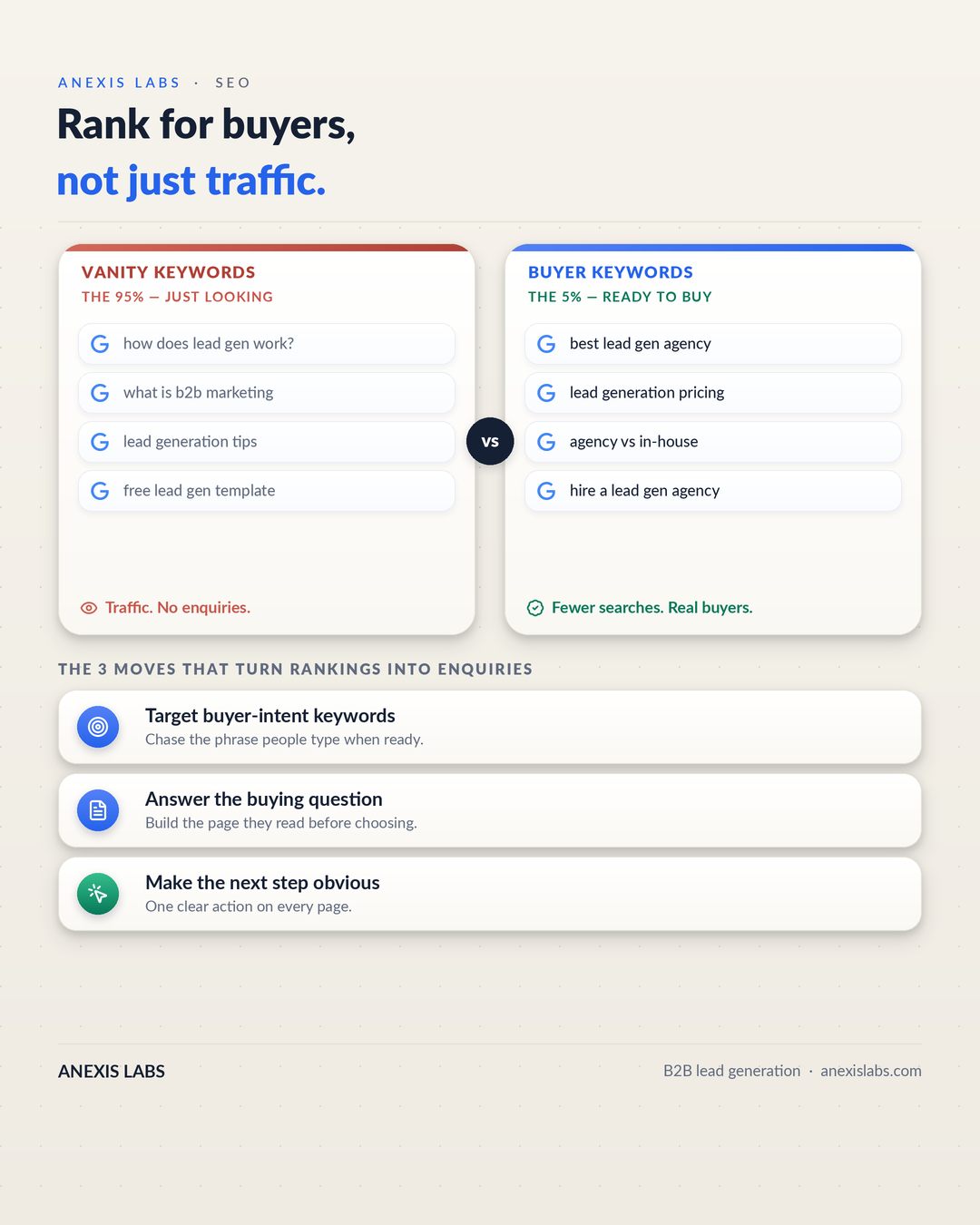
Most sites are built to attract visitors, not buyers. And at any given moment, only about 5% of your market is actually ready to buy, while the other 95% are just researching, per the widely-cited 95-5 rule from the Ehrenberg-Bass Institute and LinkedIn's B2B Institute. If your pages are written for that 95%, with broad, informational, "what is…" content, you'll collect clicks from people who were never going to buy, and wonder why your website has traffic but no leads.
It gets worse downstream. Even when leads do come in, only about a quarter are genuinely sales-ready; the rest quietly drain your team's time. So "more traffic" often just means "more junk to sift through." The fix isn't to turn off the tap. It's to change who the tap attracts, and what happens the moment they land.
7 reasons your website gets traffic but no leads
When we audit a B2B site that has traffic but no leads, it's almost always some combination of these seven leaks:
- No clear call to action: the visitor doesn't know what to do next, so they do nothing.
- A weak or vague offer: "we help businesses grow" gives no reason to act.
- Slow load speed: every extra second quietly kills conversions.
- Zero proof: no case studies, numbers, or testimonials to reduce doubt.
- Generic copy: it talks about you, not the buyer's problem.
- No lead magnet: nothing worth trading an email address for.
- No follow-up: the few leads you get go cold before anyone replies.
Fix these before you spend another rupee driving more visitors. Pouring traffic into a leaky page just wastes it faster.
You don't have a traffic problem. You have an offer problem.
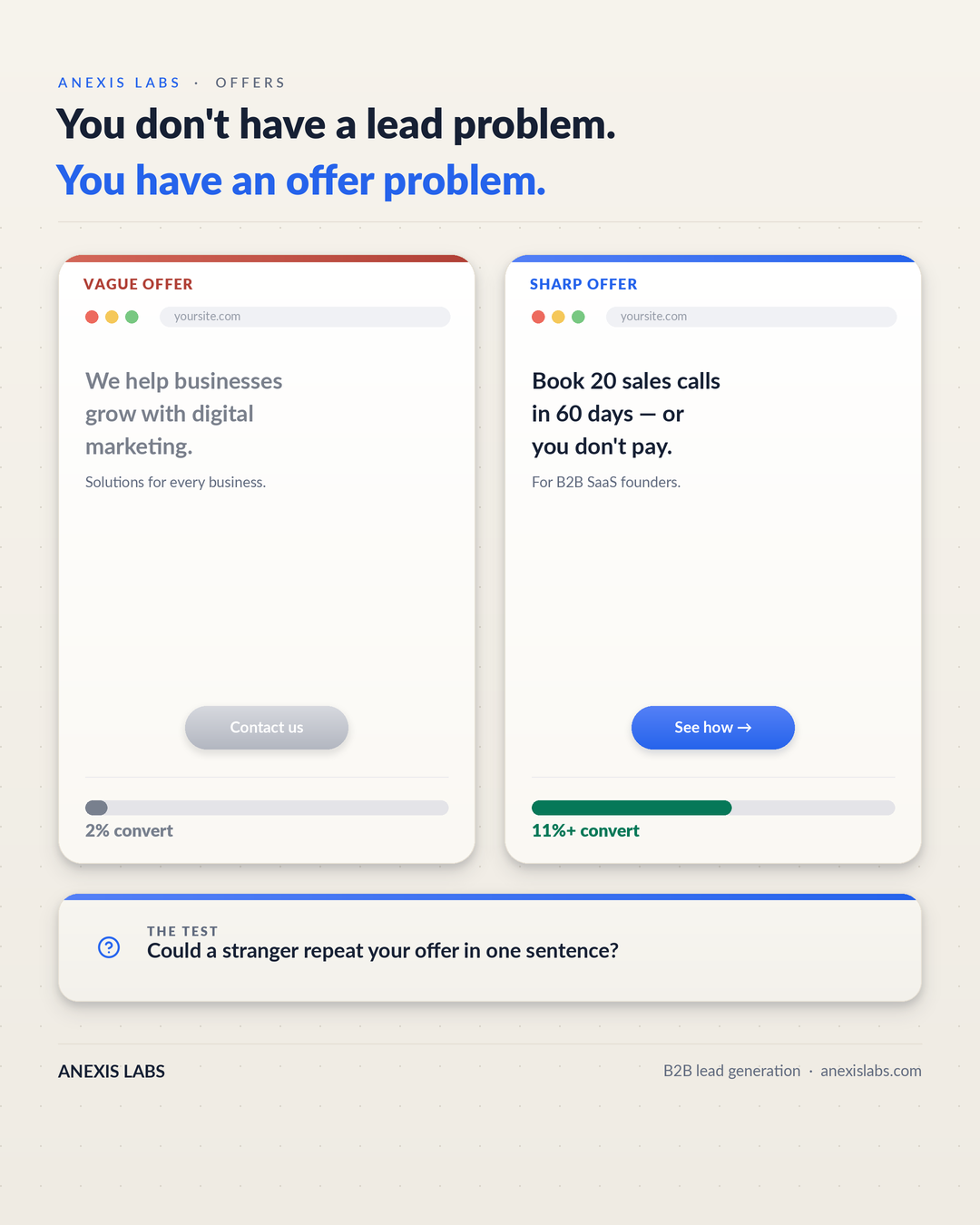
The single biggest reason a website gets traffic but no leads is a soft offer. The average B2B landing page converts around 2%, while the best convert 11% or more, according to WordStream's benchmarks. That gap is almost never about traffic volume. It's about the offer.
A sharp offer is built from three parts: a specific outcome ("Book 20 sales calls in 60 days"), an exact buyer ("for B2B SaaS founders"), and proof or terms ("or you don't pay"). Put them together and you get something impossible to ignore.
Could a stranger repeat your offer in one sentence? If not, that's your leak.
A quick example: 40,000 visits, 6 enquiries
One B2B client came to us with a page that was doing everything "right" on paper, with thousands of visits a month from content that ranked well. The problem: it ranked for broad, informational searches, opened with a paragraph about the company, and ended with a generic "Contact us." Forty thousand visits had produced six enquiries in a quarter.
We didn't touch the traffic. We rewrote the page around one buyer and one outcome, moved proof above the fold, and added a downloadable checklist for people who weren't ready to talk yet. Same visitors, but now the right ones had a reason to act, and enquiries multiplied. The lesson repeats on almost every site with traffic but no leads: the traffic was never the problem.
How to turn website traffic into qualified leads
Once the offer is sharp, here's the system that converts existing traffic into qualified leads, with no extra ad spend required.
1. Target buyer-intent keywords, not vanity terms
Ranking for "how does lead generation work" brings researchers. Ranking for "best lead generation agency" or "lead generation pricing" brings buyers. Chase the phrases people type when they're ready to act, and the traffic you get will actually convert.
2. Match every page to one buying question
Each key page should answer the exact question a buyer has right before they choose, and nothing else. Relevance is what turns a reader into an enquiry, so resist the urge to make one page do five jobs.
3. Give every page one job
One promise, one proof point, one clear next step. Add a lead magnet (a checklist, a template, a teardown) so visitors who aren't ready to talk still raise their hand. Every extra option or distraction costs you a lead.
4. Follow up fast
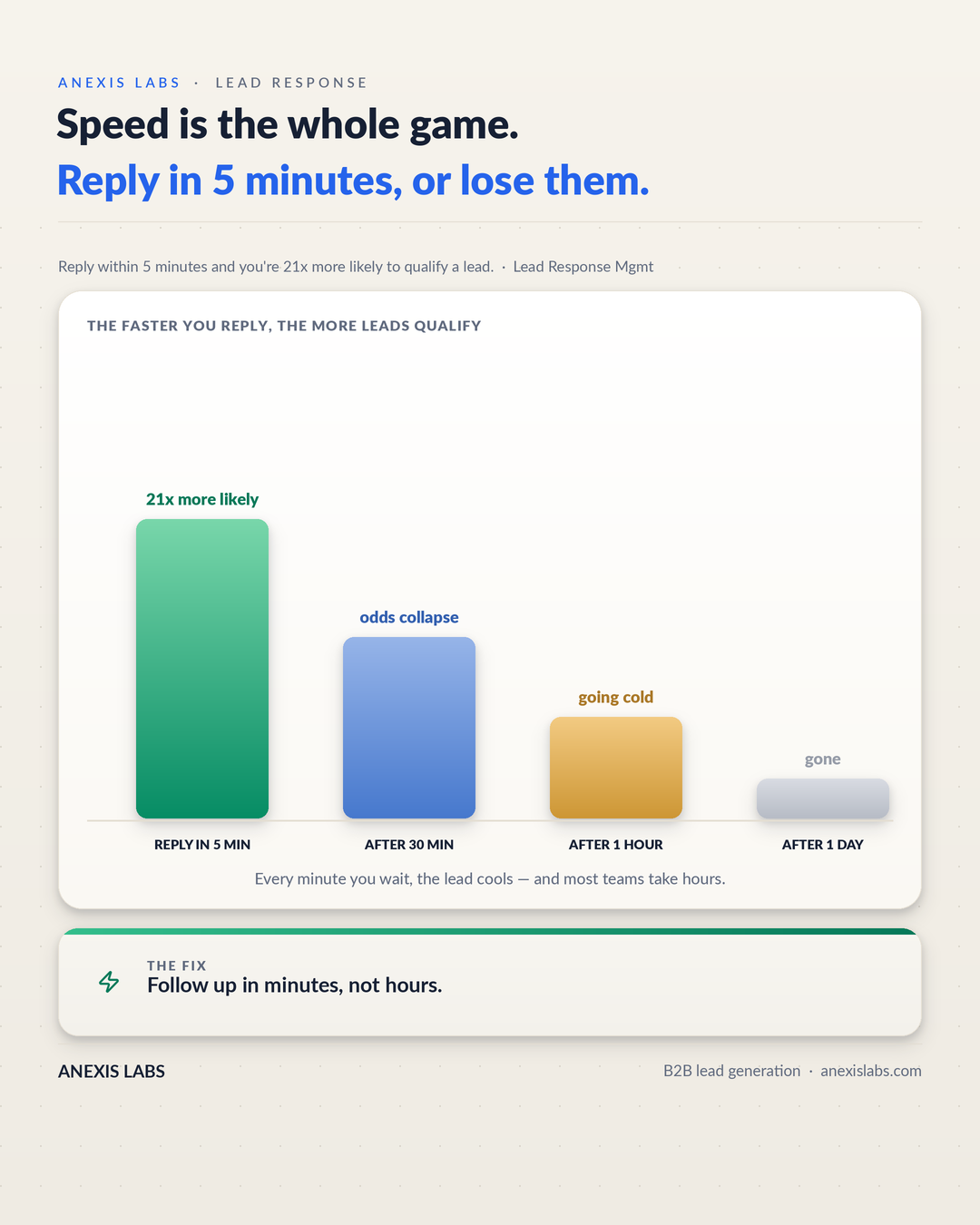
Speed is decisive. Businesses that respond within five minutes are far more likely to qualify a lead than those that wait an hour, as the classic Harvard Business Review study on lead response time found. Wire your capture straight into fast, personalised follow-up.
5. Measure to booked calls, not clicks
Track conversions down to real conversations and booked calls. Then double down on the pages and channels that produce them, and cut the ones that only produce traffic.
The mistake that wastes the most traffic
The most expensive mistake in B2B is treating all traffic as equal. Someone searching "what is lead generation" and someone searching "lead generation agency pricing" are worlds apart: one is learning, the other is buying. If your pages, offers, and calls to action are built for the learner, the buyer bounces, and you conclude the channel doesn't work. It does; you were just speaking to the wrong stage of the journey. Segment by intent, and send buyers to pages built for buyers.
A 60-second self-audit
Open your highest-traffic page right now and ask: Does it name a specific buyer in the first line? Is there one clear offer and one action? Is there proof visible without scrolling? Is there something to download for people who aren't ready to talk? If you answered "no" to any of these, you've just found why your website gets traffic but no leads.
The channels that actually produce qualified B2B leads
A website that converts is the foundation. To feed it with the right traffic, the highest-return B2B channels are:
- SEO built around buyer intent: pages that rank for commercial searches ("agency", "pricing", "vs", "for [industry]"), not just informational ones. This is what earns traffic that already wants what you sell.
- Google Ads structured by intent and location: tightly themed campaigns that match the ad to the exact search, so you pay for clicks from people ready to act instead of a broad, curious audience.
- LinkedIn: an optimised profile and consistent, useful content that builds trust and sends warm, pre-sold buyers to your site rather than cold strangers.
Used together and pointed at a page that actually converts, these turn "traffic but no leads" into a predictable flow of qualified enquiries.
When to bring in a lead generation agency
If your traffic is healthy but your pipeline isn't moving, the fix is a conversion and follow-up system, not more visitors. That's exactly the problem a specialist solves. At Anexis Labs we build the full engine (offer, pages, capture, and follow-up) as one connected system. See how we approach it on our B2B Growth 360 service, or explore what we do.
Turn your traffic into genuine leads
You've already got the visitors. We'll help you convert them into qualified, sales-ready leads, with a system built around your offer, not just your traffic.
See how our B2B lead engine works →Frequently asked questions
Why is my website getting traffic but no leads?
It's usually a relevance and conversion problem, not a visibility one. Traffic lands on pages that don't name a specific buyer, make a specific offer, or point to one clear next step, so visitors read and leave. Many sites also attract researchers with broad, informational keywords instead of buyers with commercial-intent keywords.
How do I convert website traffic into leads?
Target buyer-intent keywords, sharpen your offer to a specific outcome for a specific buyer, give every page one clear call to action, add proof and a lead magnet, and follow up fast. Measure conversions to booked calls, not clicks.
What is a good B2B website conversion rate?
The average B2B landing page converts around 2%, while the best convert 11% or more. The gap is almost always the offer and the clarity of the page, not the amount of traffic.
Why are my leads not qualified?
Because your content and ads speak to a broad audience of researchers rather than in-market buyers. Only about 5% of your market is ready to buy at any time, so pages aimed at the other 95% produce curious clicks, not qualified leads.
How do I get qualified B2B leads?
Rank for the phrases buyers use when they're ready to act, build pages that answer the exact buying question, capture with a relevant lead magnet, and route leads into fast, personalised follow-up. Quality comes from relevance, not volume.